APOD on Nostr: **Astronomy Picture of the Day** 23 September 2026 **A New Lunar Crater: McGetchin** ...
**Astronomy Picture of the Day**
23 September 2026
**A New Lunar Crater: McGetchin**
Image:
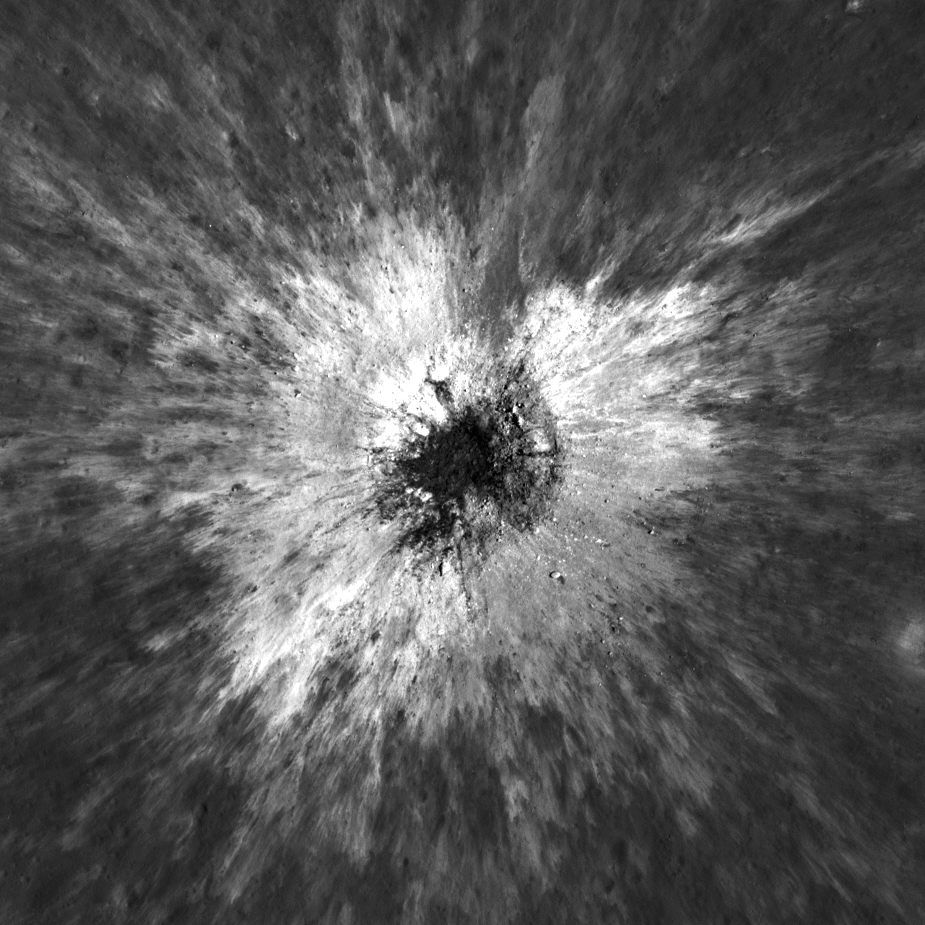
Image Credit: NASA/GSFC/Intuitive Machines Text: Keighley Rockcliffe ( NASA GSFC , UMBC CSST , CRESST II )
A once-in-a-lifetime crater has appeared on the Moon! A comet or asteroid roughly the size of a humpback whale (approximately 10-20 meters, 30-60 feet) crashed into the Moon sometime between April and May of 2024. The Lunar Reconnaissance Orbiter (LRO), with its monthly monitoring of the Moon , captured today’s images of the lunar surface before and after the event. The resulting crater, named after Apollo-era lunar scientist McGetchin , is two soccer fields across. Craters of this size are only expected once every 132 years ! Follow up thermal imaging revealed a large cold spot that surrounds the warm crater. Surface impacts will puff up the loose lunar sediment, or regolith , making it less dense and harder to retain heat. This event affected an area much larger than the visible crater , which will inform humanity’s understanding of surface impacts and the evolution of the Moon’s surface. It also reminds us all to be thankful for Earth's atmosphere .
#APOD #LunarImpact #McGetchinCrater #MoonCrater #LunarSurface #LRO
https://apod.nasa.gov/apod/ap260923.htmlPublished at
2026-09-23 04:05:45 UTCEvent JSON
{
"id": "c6e6b4f9cf77d64cce7d954c5b9594912efd28775644332368673cdfa25767e6",
"pubkey": "e85ed75286cb77475776c1007df8c4ff1c9c68eff91c3627347b065c5bf4dc78",
"created_at": 1790136345,
"kind": 1,
"tags": [],
"content": "**Astronomy Picture of the Day**\n\n23 September 2026\n\n**A New Lunar Crater: McGetchin**\n\nImage: https://apod.nasa.gov/apod/image/2609/mcgetchin_after.jpg\n\nImage Credit: NASA/GSFC/Intuitive Machines Text: Keighley Rockcliffe ( NASA GSFC , UMBC CSST , CRESST II )\n\nA once-in-a-lifetime crater has appeared on the Moon! A comet or asteroid roughly the size of a humpback whale (approximately 10-20 meters, 30-60 feet) crashed into the Moon sometime between April and May of 2024. The Lunar Reconnaissance Orbiter (LRO), with its monthly monitoring of the Moon , captured today’s images of the lunar surface before and after the event. The resulting crater, named after Apollo-era lunar scientist McGetchin , is two soccer fields across. Craters of this size are only expected once every 132 years ! Follow up thermal imaging revealed a large cold spot that surrounds the warm crater. Surface impacts will puff up the loose lunar sediment, or regolith , making it less dense and harder to retain heat. This event affected an area much larger than the visible crater , which will inform humanity’s understanding of surface impacts and the evolution of the Moon’s surface. It also reminds us all to be thankful for Earth's atmosphere .\n\n#APOD #LunarImpact #McGetchinCrater #MoonCrater #LunarSurface #LRO\n\nhttps://apod.nasa.gov/apod/ap260923.html\n",
"sig": "da158444aae28b88d12afced20f1d22a8f38b90b0ff3c5c239931dc519e6a9a279854cccec24b26e3a8f8810e3507d65afac3a9a888830917028b62861a1f1f2"
}
